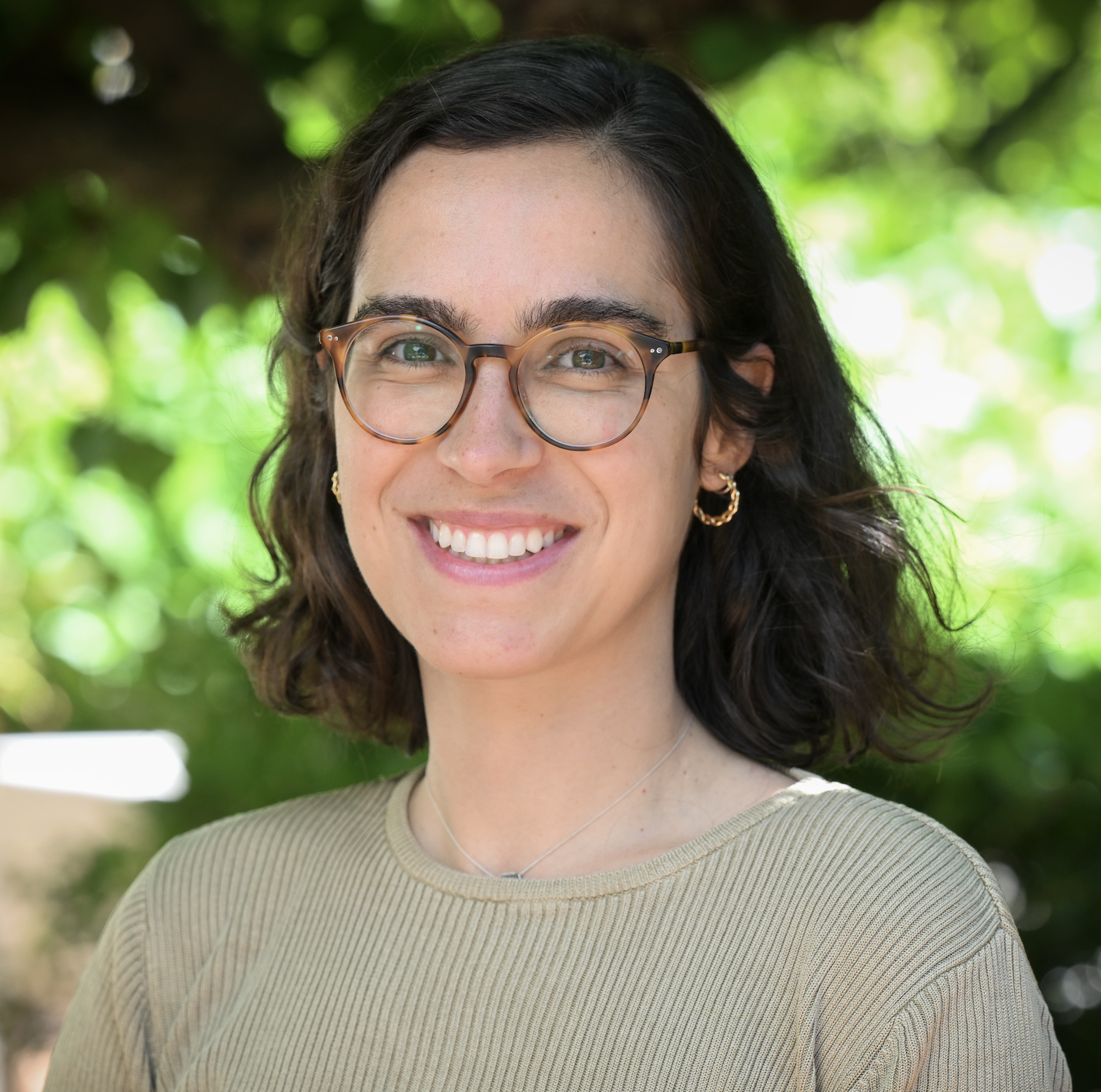
Clara Bicalho
(pronounced bee-KAH-leeoh)
Postdoctoral Fellow
Emory University
clara.bicalho [at] emory.edu
I am a Postdoctoral Fellow at Emory University, co-PI at the Local Politics and Policy Lab at Emory University, and Research Associate at the Center of the Politics of Development. Previously, I was a Tinker Postdoctoral Fellow at the Center for Latin American Studies at Stanford University. I received my PhD in political science from the University of California, Berkeley.
My work examines the determinants of collective land titling reforms in Latin America and its effects on identity, governance, and political participation. I employ quantitative and qualitative methods to explore how these questions apply to the case of quilombos (afrodescendent communities) in Brazil.
My research in methodology focuses on causal inference with a focus on tests of identification conditions in observational research, problems of external validity and cumulative learning, and experimental designs to advance theory and practice. This research is especially guided by the practical considerations and challenges I have faced in applied settings. See Research and Software tabs for related research and R software packages.
This work been supported by APSA's Doctoral Dissertation Research Improvement Grant (DDRIG) program and APSA's Warren E. Miller Fund in Electoral Politics, as well as the Institute for International Studies at UC Berkeley.
You can find a copy of my CV here.
Sou pós-doutoranda na Emory University, pesquisadora no Local Politics and Policy Lab e pesquisadora associada no Center of the Politics of Development. Antes disso, fui a primeira bolsista Tinker de pós-doutorado no Center for Latin American Studies da Stanford University. Sou doutora em Ciência Política pela University of California, Berkeley.
Minha pesquisa explora os fatores que influenciam a mobilização e eventual obtenção da titulação coletiva de terras na América Latina e seus efeitos sobre identidade, governança e participação política nas comunidades contempladas. Utilizo uma combinação de métodos quantitativos e qualitativos, com foco no caso empírico dos quilombos no Brasil.
Minha pesquisa em metodologia se concentra na área de inferência causal, com foco em testes de identificação para desenhos de pesquisas que se utilizam de experimentos naturais, problemas de validade externa e aprendizado cumulativo. Também deselvolvo ferramentas para quem utiliza experimentos com intuito de avançar tanto a teoria quanto a prática. Consulte as abas Research e Software para pesquisas relacionadas e pacotes de software R.
Minha pesquisa recebeu apoio da Associação de Americana de Ciência Política e do Instituto de Estudos Internacionais (IIS) na University of California, Berkeley.
Acesse meu currículo Lattes aqui.
Research
Peer-Reviewed Publications
“The Power of Prognosis: Improving Covariate Balance Tests with Outcome Information”
(with Thad Dunning and Adam Bouyamourn) Political Analysis 2026, 1–26.
[article]
[appendix]
[data and code]
2021.““If we move, it moves with us:” Physical Distancing in Africa during COVID-19” (with Melina
Platas and Leah Rosenzweig) World Development 142 (2021) 105379.
[article]
[appendix]
[pre-analysis
plan]
[data and code]
[The Washington Post]
2019. “Voter information campaigns and political accountability: Cumulative findings from a
preregistered meta-analysis of coordinated trials.” (with Thad Dunning et al.) Science
Advances 5.7 (2019): eaaw2612.
[article]
[pre-analysis plan]
[data and code]
2019. “Meta-Analysis” (with Thad Dunning, Anirvan Chowdhury, Guy Grossman, Macartan Humphreys,
Susan D. Hyde, Craig Mcintosh, and Gareth Nellis) in Information, Accountability, and
Cumulative Learning: Lessons from Metaketa I. Thad Dunning, Guy Grossman, Macartan
Humphreys, Susan D. Hyde, and Craig Mcintosh (Eds.). Cambridge University Press.
[book chapter]
[pre-analysis plan]
[data and code]
Working Papers
“Disentitled: Subnational Politics of Communal Land Titling”
Abstract
Despite recent land reform policies targeting the demarcation and protection of indigenous and
afrodescendent communities' collective land rights in Latin America, enormous gaps persist in
formalizing these rights. In this paper, I examine the political dynamics between the state,
landed elites, and communal land claimants to explain why some communities are more successful
than others in obtaining formalization. I focus on claims to collective land made by 1,881
afrodescendent communities in Brazil known as quilombos across 752 municipalities. I compile
municipal-level panel data to investigate determinants of two separate titling outcomes: whether
claims are analyzed by the state and whether titles are granted. The findings reveal that
municipalities with higher capture by local landed elites experience higher rates of national
government’s response to communal claims. However, successful titling is significantly greater
in municipalities where claimants make up a higher proportion of voters. I employ observational
and interview data to explore the mechanisms that lead to these separate outcomes. This paper
underscores the importance of subnational politics and of unpacking titling stages as a means of
understanding when and why formalization of collective land rights is successful.
“Ethnic Identification and Ethnic Deception: Experimental Evidence from Uganda, South Africa, and the United States” (with Adam Harris, Daniel Nielson, Lily Medina, Michael Findley, Jeremy Weinstein, James Habyarimana, Macartan Humphreys, Daniel Posner).
Teaching
Co-Instructor
LATINAM397 Thesis Writing Seminar (graduate-level), Winter 2025, Stanford University
Graduate Student Instructor (Teaching Assistant) at UC Berkeley
PS231A Quantitative Methods in Political Science (Prof. Dunning, graduate-level), Fall 2021
Outstanding Graduate Student Instructor Award
PS231B Quantitative Methods in Political Science (Prof. Dunning, graduate-level), Spring 2022
Projecting Power (Prof. Wasow, undergraduate-level), Spring 2024
Short Course Instructor
Statistical Power in R (in Spanish), EGAP Learning Days Colombia, October 2021
Software
and Applications
Software
[1] 2026. pwtest: Prognosis-Weighted Balance Tests (with Thad Dunning and Adam Bouyamourn). R package version 0.1.0, URL Package Repository.
[2] 2019. DesignLibrary: Library of Research Designs (with Graeme Blair, Jasper Cooper, Alexander Coppock, Macartan Humphreys, Neal Fultz, and Lily Medina). R package version 0.1.4, URL https://cran.r-project.org/web/packages/DesignLibrary/index.html
RShiny Applications
DDWizard (with Sisi
Huang and
Markus Konrad). This web app
allows users to select and customize research designs from a library of templates, simulate
data, and obtain diagnostic statistics such as power, bias, and root mean squared error of
estimates. The app is an interface for using the
DeclareDesign framework
and R packages that does not require knowledge of R and allows easy sharing of designs.
[read more]
[Github
repo]
Metaketa I Meta-Analysis Dashboard. This interface implements the core meta-analyses for the Metaketa I study and allows users to explore sensitivity of results to alternative specifications.